25 Micro Braids Ideas That Are Actually Worth the Salon Time
Micro braids have been back for a few years now, and they’re not slowing down. If anything, the styles have gotten better: more intentional, more varied, and a lot more interesting than the simple straight-down looks that defined the 90s. Brandy wore them on Moesha and made them iconic. Zoe Kravitz wore them in a low bun and the internet collectively lost its mind. Now they’re showing up on TikTok as DIY projects, on Instagram as vacation hair, and in salons as a serious protective style investment.
If you’re considering getting them, you’re probably already deep in a Pinterest spiral. This list is meant to cut through the noise and give you 25 actual micro braids ideas worth bookmarking, with enough context on each one that you can show up to your appointment with a clear vision instead of just a vague mood board.
But first, a few things you need to know before you commit.
What Are Micro Braids, Really?
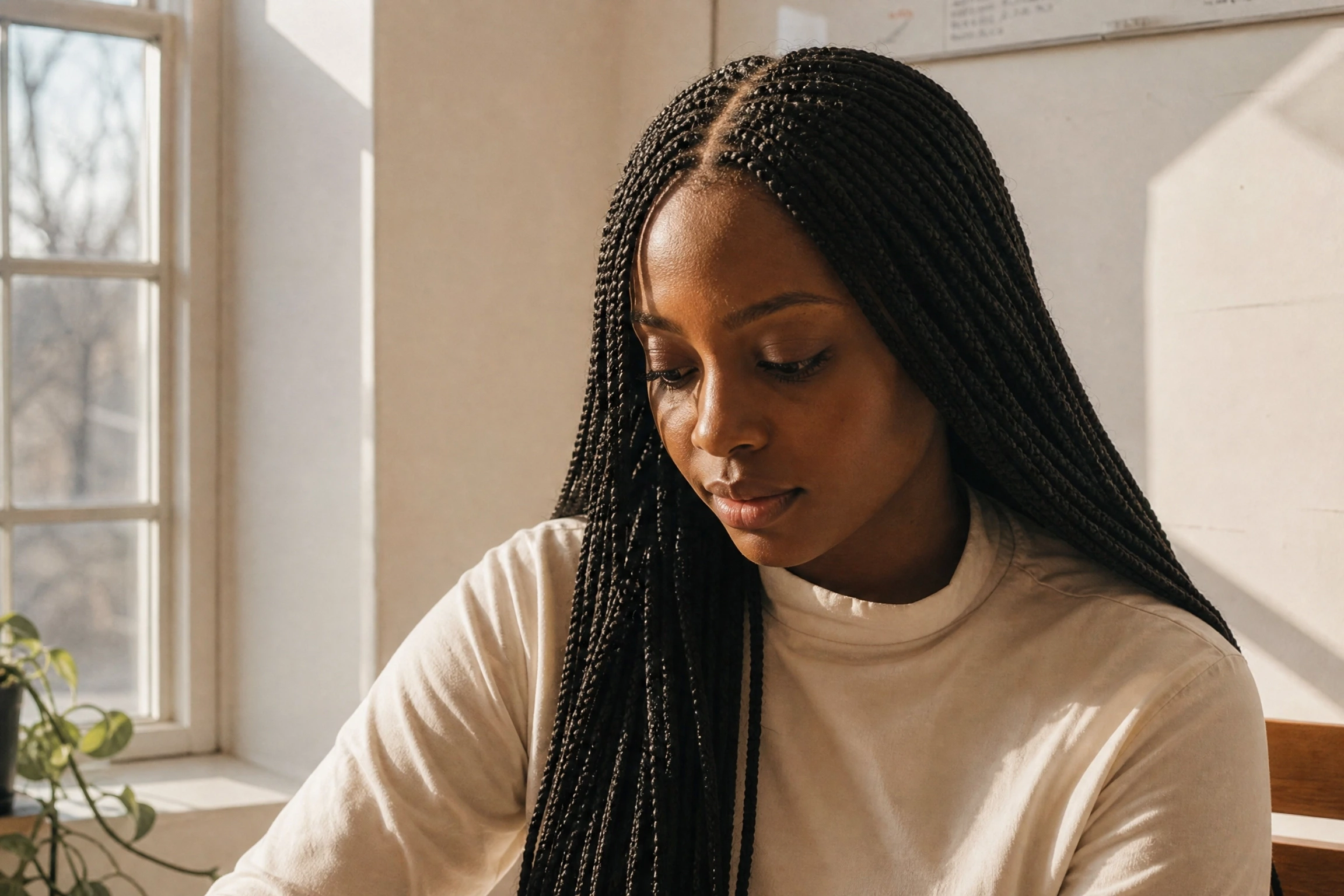
Micro braids are exactly what they sound like: braids braided at an extremely small size, sometimes barely thicker than a single strand of hair. Unlike box braids, which section the hair into clean geometric boxes, or knotless braids, which start flat and build gradually, micro braids are individual braids worked from the root down in very fine sections throughout the entire head.
Because each braid is so small, the finished result has a lot of natural movement. You can style micro braids almost exactly the way you’d style a blowout: ponytails, buns, half-ups, loose waves, without the telltale bulk that comes with larger braids. That’s why they’ve always attracted people who want the protection of a braided style without giving up the fluidity of having “regular” hair.
The trade-off is time. Depending on the length of your natural hair and your desired length with extensions, installation typically runs anywhere from 6 to 12 hours, and some stylists split it across two days. That’s a real commitment, and it’s one reason why finding a braider who specializes in micros specifically matters more than it does with other styles.
How Long Do Micro Braids Last?
Most micro braids hairstyles hold well for 6 to 8 weeks with consistent care. Some people push them to 10 or 12 weeks, and specialist micro braiders have been quoted saying their clients wear them for up to three or four months. But the advice from trichologists is to aim for 6 to 8 weeks max and give your scalp at least a week to breathe before reinstalling any protective style.
The reason micro braids tend to outlast larger box braids is simple: because they’re so small, new growth isn’t as obvious. The braids stay looking fresh longer before the root area starts to show significant frizz or tension.
A Note on Scalp Health Before You Book
This is the part most style posts skip, and it’s the part that matters most if you want to keep doing protective styles long term.
Micro braids place tension on a very small number of strands per braid. That means each braid has less of an anchor than a larger box braid does, and if the braiding is done too tightly, the cumulative stress adds up fast. Traction alopecia, a condition caused by repeated tension on the follicle, is one of the most common issues dermatologists see in people who wear braided styles frequently. Dr. Oyetewa Oyerinde, a dermatologist and hair loss specialist at Baylor College of Medicine, has noted that tight braids worn repeatedly can weaken follicles and lead to thinning edges or bald spots that, if ignored long enough, can become permanent.
None of that means micro braids are dangerous. It means a few things need to be in place:
Your stylist should use tension that feels secure but not painful. If you feel sharp pulling at the root, say something immediately. A good braider will adjust.
Prep your hair before the appointment. Certified trichologist Tracy Brown recommends a scalp detox before any braided style is installed. Clean scalp, healthy starting point.
Don’t keep them in past the point where your roots start to mat or your edges feel stressed.
Use lightweight oils (think peppermint, tea tree, or jojoba) on your scalp between wash days. Trichologist Sophia Emmanuel specifically advises against heavy oils like castor oil directly on the scalp, because they can clog pores and trap dirt.
Wash gently while in the style. The advice from specialists is roughly once a week, using a sulfate-free or diluted shampoo applied with an applicator bottle that can reach the roots.
Okay. Now for the actual ideas.
25 Micro Braids Ideas Worth Saving
1. Classic Long Micro Braids, Straight Down
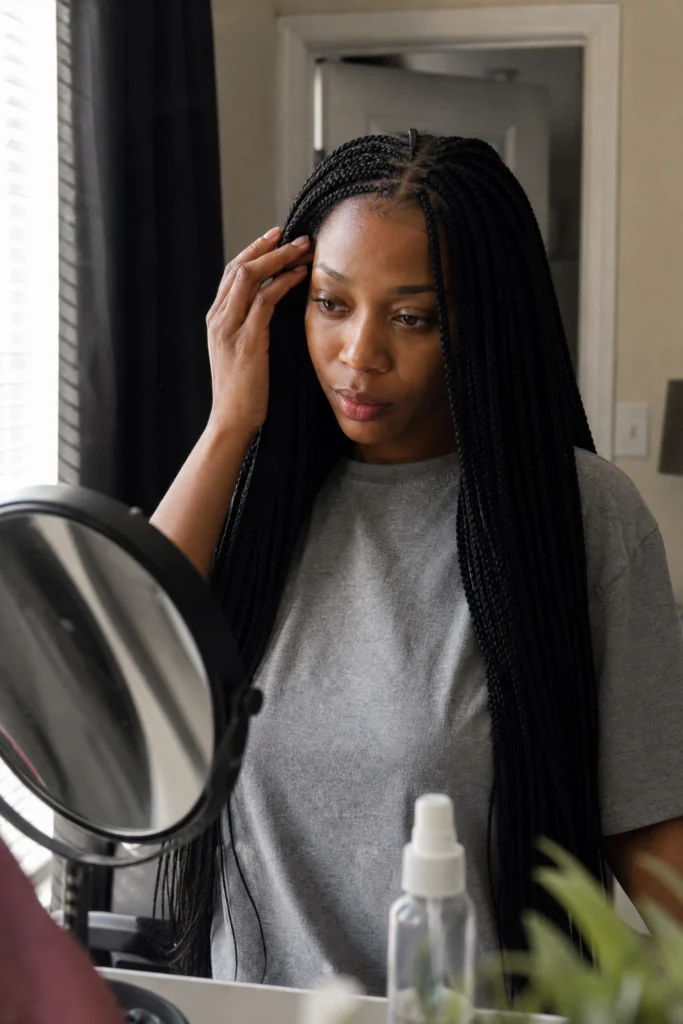
This is the foundation style, and there’s nothing wrong with it. Waist-length or hip-length micro braids worn straight down, parted in the middle, create that fluid, hair-like movement that made the style famous. The braids should be uniform in size and tension for the look to land correctly. The trick is that because they’re so thin, even small inconsistencies in size show up noticeably. This is the style where the skill level of your braider matters the most. Ask to see their work before you commit.
Best for: Most hair textures, best results with hair at least 4 inches long. Works beautifully as a year-round protective style.
2. Micro Braids with Curled Ends
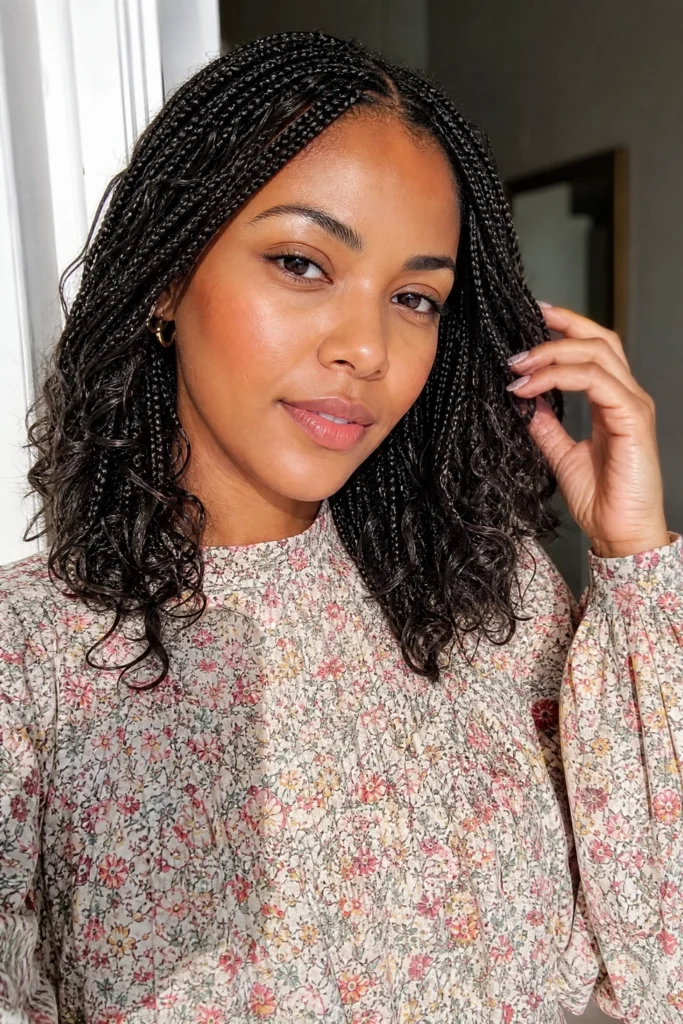
Straight braids with wavy or curled ends, achieved either by braiding and leaving the last inch or two of extensions unbraided and then using a small-barrel curling iron or by using pre-curled extension hair, is one of the most popular micro braids styles circulating right now. It gives you the neatness of a braided style at the top and softness at the bottom. The ends move differently from the braids and create a two-texture effect that photographs really well.
Best for: Anyone who wants a little more femininity in their micro braids without going full boho.
3. Micro Braid Bob
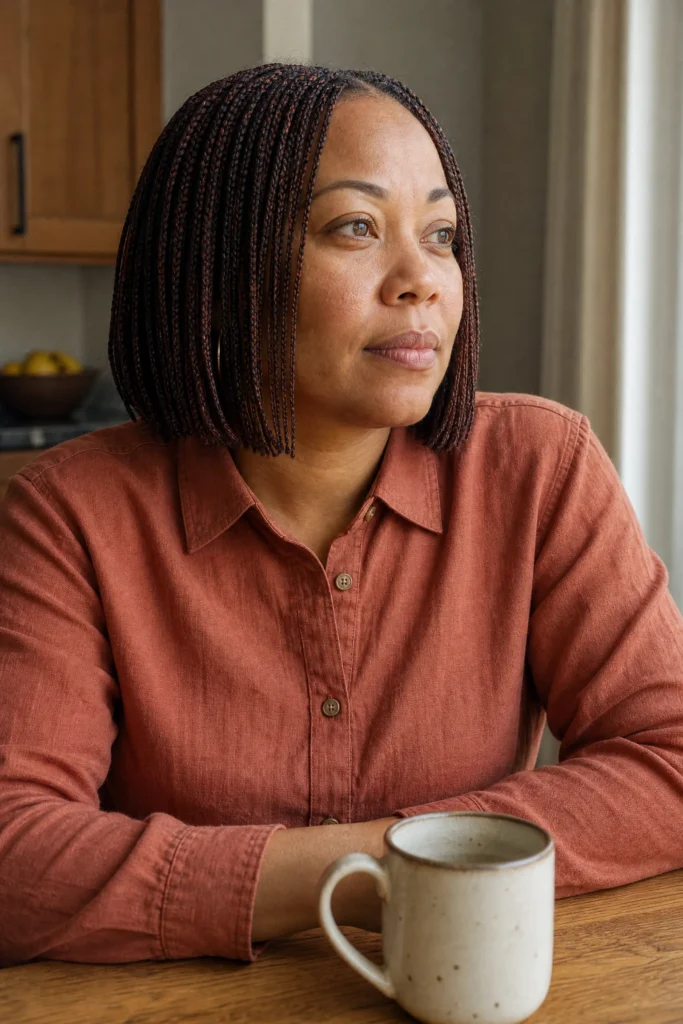
A bob cut with micro braids has become a serious contender. The braids are cut or installed at jaw to collarbone length, giving you all the weight reduction that comes from shorter braids and none of the neck tension from long ones. It’s also easier to manage day-to-day. The cut needs to be clean. Ask your braider to trim the ends bluntly or at a slight angle. A messy or uneven cut on braids this small is going to read as unkempt rather than intentional.
Best for: People with naturally shorter hair who want to skip the drama of long extensions, and anyone who finds long braids feel heavy on their scalp.
4. Half-Up, Half-Down Micro Braids
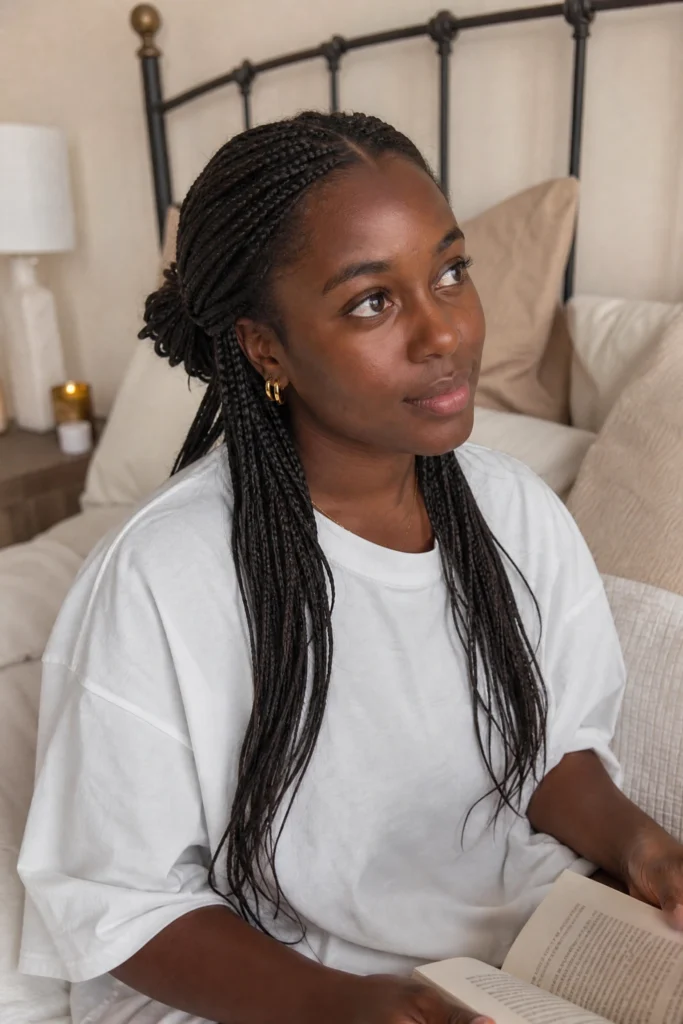
Take the top section of your braids and pull them back into a low knot or puff, leaving the rest to fall loose. This is genuinely one of the easiest styles to execute after installation and one of the best-looking. It works because micro braids have enough weight and fluidity that the loose section doesn’t look frizzy or undefined. It just falls. The half-up portion can be a messy knot, a sleek bun, or a twisted roll pinned flat. All three versions work.
Best for: Every hair length. If your braids are short, the contrast between the pulled-up section and the shorter loose section still looks great.
5. Micro Braids with Beads
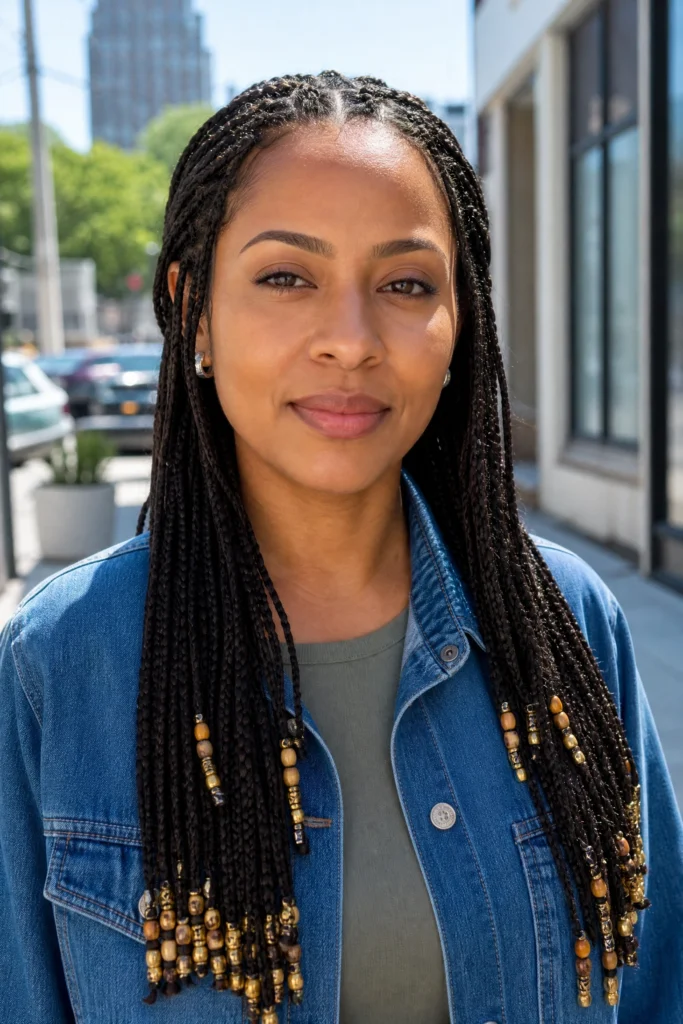
Beads on micro braids serve both a functional and aesthetic purpose. They weigh the braids down slightly so they lie flatter, and they add color, contrast, and texture in a way that’s completely customizable. Gold or wooden beads are the classic pairings. Shell beads have had a strong run on social media for the last two years and still look fresh. The key to not overdoing it: bead selectively. A few braids at the front, framing the face, tends to look more intentional than beads distributed randomly throughout.
Best for: All micro braids styles, but especially long and half-up variations. Great if you want something that feels more styled without recutting or repositioning every morning.
6. Ombre Micro Braids
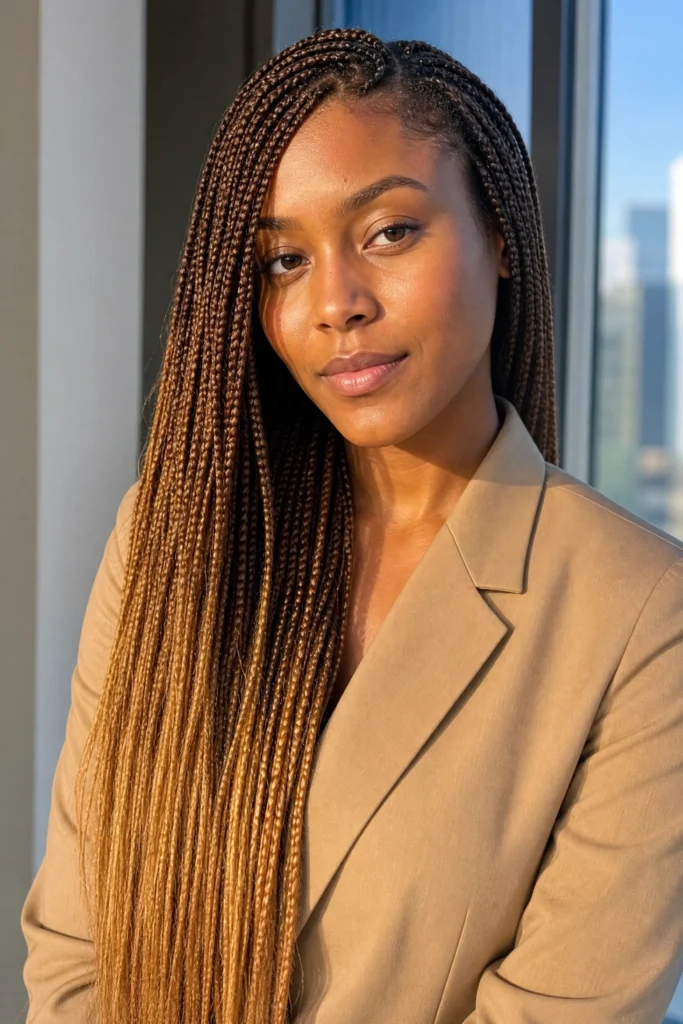
Start with your natural color at the root and fade into a lighter shade: honey blonde, caramel, auburn, or even something bolder like copper, toward the mid-length and ends. The gradient reads as natural color variation when the braids move, which is part of the appeal. You’re not seeing a stark line of color change; you’re seeing dimension. This works especially well on longer micro braids because the fade has more length to develop across.
Best for: Anyone who wants color without the commitment of chemical dye on their natural hair. All textures, any length that’s at least shoulder-length for the ombre to show clearly.
7. Micro Braids Ponytail
Gather everything into a high or mid ponytail and secure it. That’s it. This sounds simple because it is, but micro braids make it look better than it sounds. The braids don’t create the puffy, textured ponytail you’d get from coarser box braids. Instead, they fall smoothly, creating a low-bulk, sleek tail that moves. Add a hair cuff or wrap a single thin braid around the base of the ponytail for a finishing detail that takes 30 seconds and looks deliberate.
Best for: Anyone with braids that are shoulder length or longer. Perfect for days when you want everything off your neck without spending any real time styling.
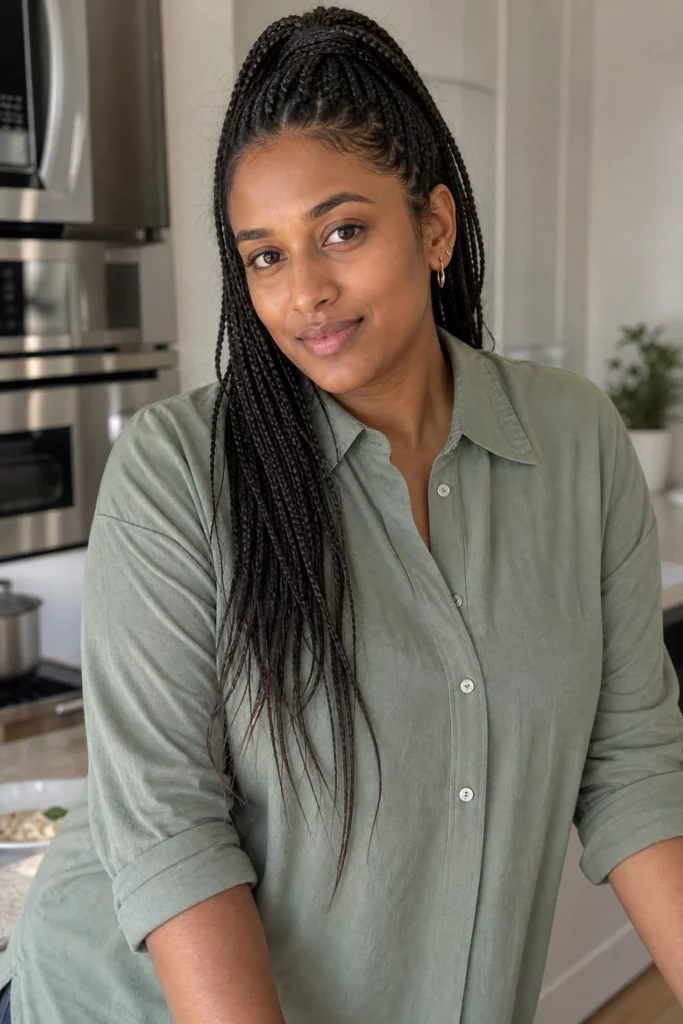
8. Micro Braids with a Middle Part and Face-Framing Pieces
Part everything down the center and pull two thin braids from the front section on each side to hang forward, framing the face. The rest falls back. This style works because the face-framing braids create a focal point that draws attention to the eyes and cheekbones, and the middle part is a classic that never looks dated. It’s subtle, easy to achieve, and wears well from morning to evening without adjustment.
Best for: Oval, heart, and longer face shapes particularly. If you have a very round face, a slightly off-center part can be more flattering.
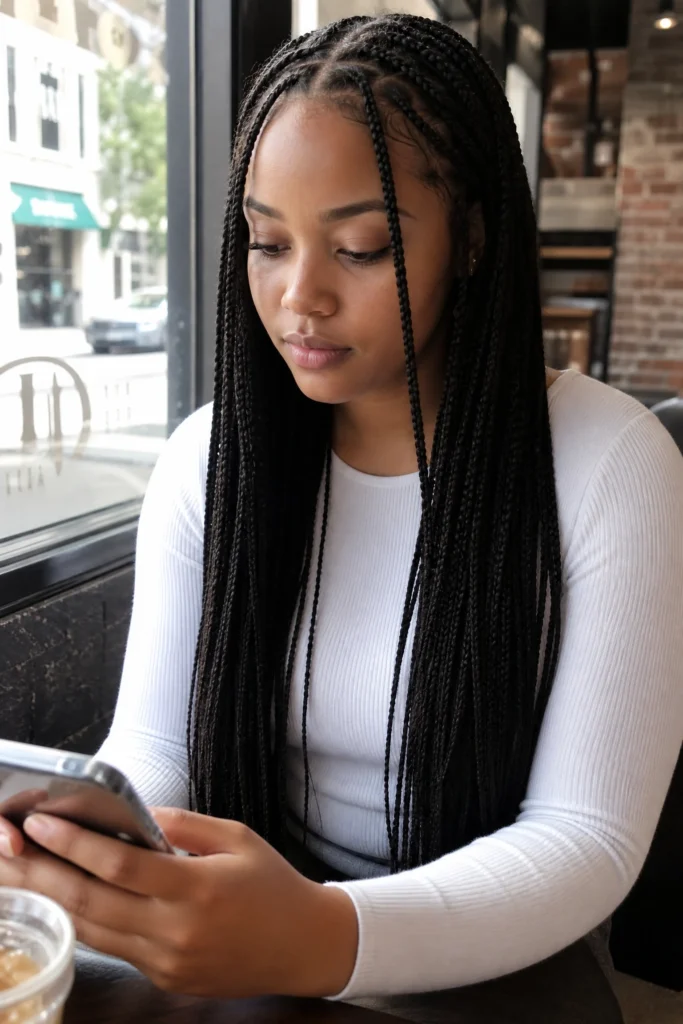
9. Micro Braids High Bun
Pull all the braids to the top of your head and secure into a bun. The height of the bun lifts your features and creates a clean, structured look. What makes this work better with micro braids than with other braid styles is volume control: because each braid is so thin, the bun itself is dense and polished-looking without being overly poofy. Leave two thin braids down on each side for a softer, face-framing version, or slick everything up for a more graphic, intentional aesthetic.
Best for: All lengths as long as the braids are at least chin-length. Great for formal occasions.
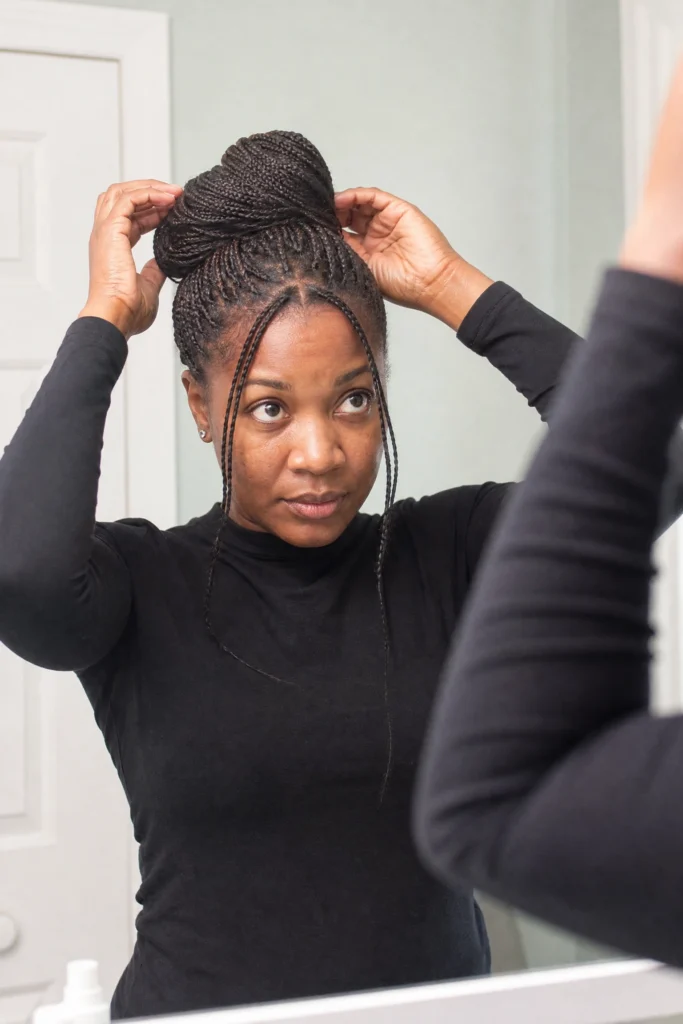
10. Boho Micro Braids with Loose Wavy Ends
This is the current moment’s most-pinned micro braids look. The braids are installed with most of the extension hair braided, but a portion of the ends is left unbraided and loose, and those loose pieces are wet-set or air-dried into waves or curls. The result is something that looks like it’s growing directly out of your head, effortless and a little undone in the best way. It bridges the gap between a structured protective style and the kind of undone texture that makes people ask what you did to your hair.
Best for: Anyone who wants a less “finished” look, or who tends to find straight micro braids feel a little too neat for their style. The loose ends do require some maintenance to keep looking soft. A curl refresh spray and occasional scrunching while damp helps.
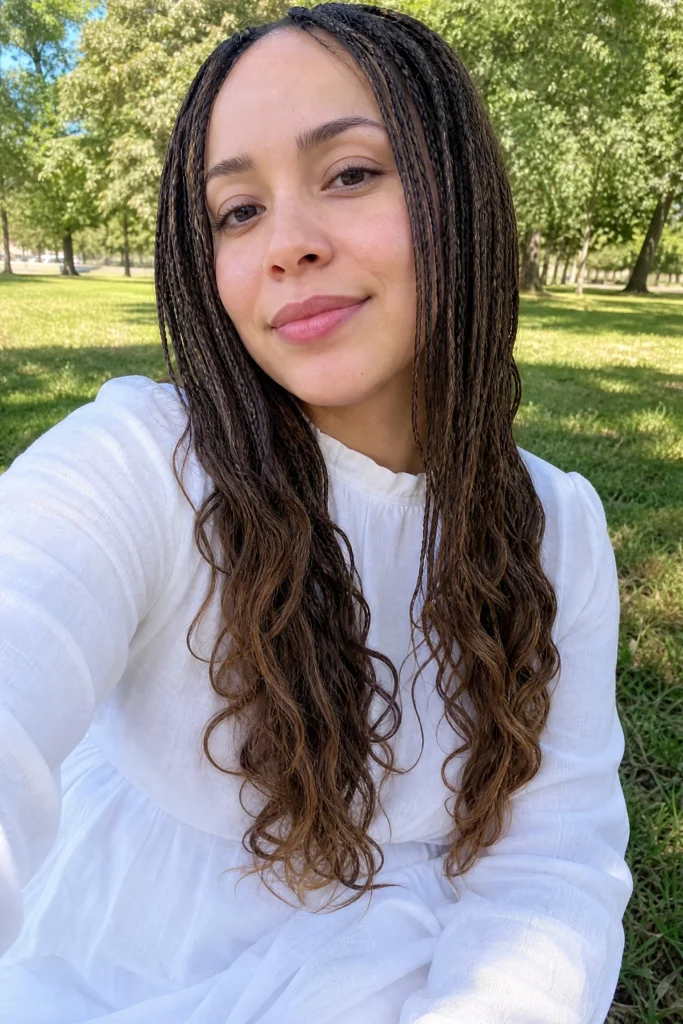
11. Micro Braids Crown Braid
Section off the top layer of braids, specifically the ones closest to your hairline and the part line, and braid those sections together or twist them, then wrap and pin across the top of your head like a headband. The remaining braids fall loose behind. You end up with what looks like a woven crown sitting on top of flowing braids beneath. This takes some practice to get the placement even, but once you have it down, it holds all day and looks like a completely different style from your regular half-up.
Best for: Shoulder length and longer micro braids. Great for formal events or occasions where you want something that looks deliberate without being overly structured.
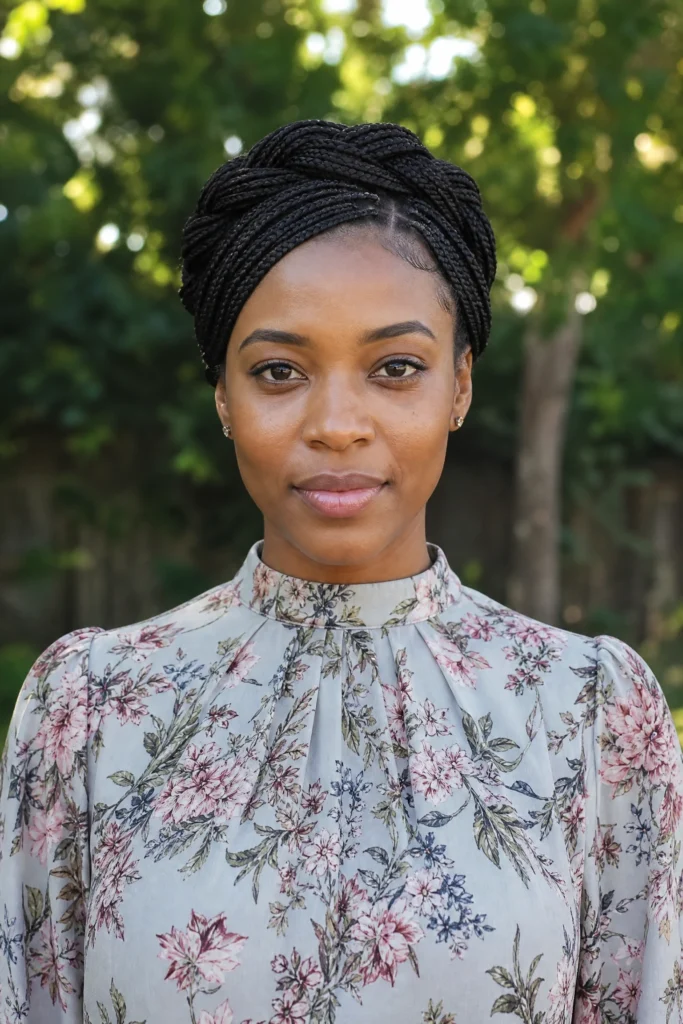
12. Short Micro Braids
Yes, micro braids work at shorter lengths. If your natural hair is at ear to chin level, you can get micro braids installed at that same length, without extensions, or with minimal added length. The result is a short, textured style with a lot of movement, almost like a textured pixie, but with the smoothness of braids. This is genuinely underrepresented in most micro braids ideas posts, and it’s a great option for anyone who’s nervous about the weight and commitment of long extensions.
Best for: People with shorter natural hair or anyone who wants the feel of micro braids without the length or installation time that comes with waist-length versions.
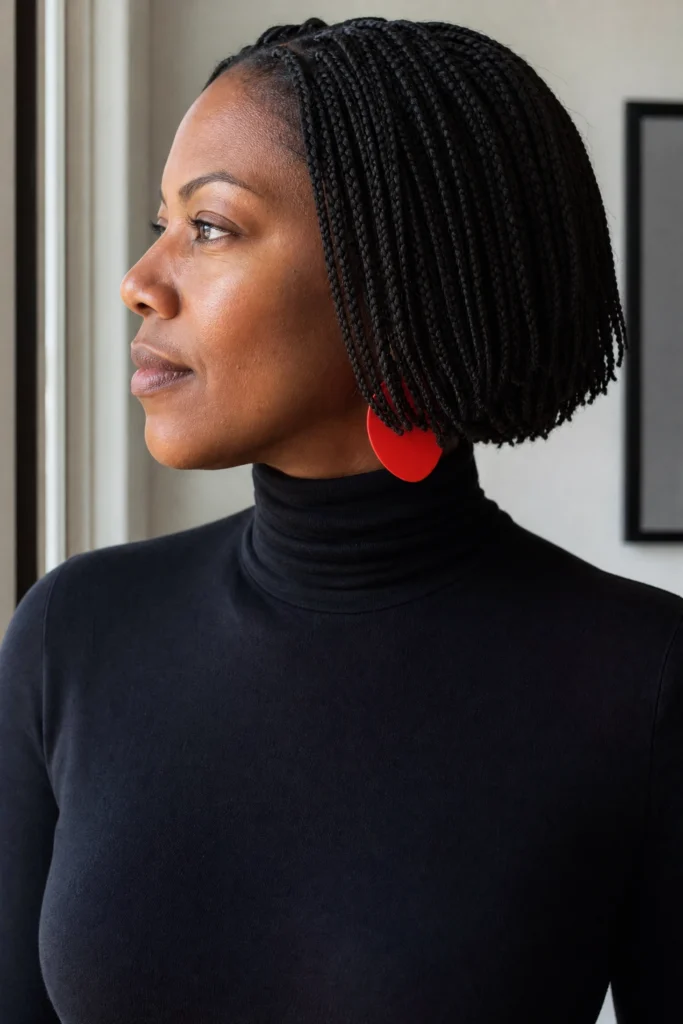
13. Micro Braids with a Side Part
Swap the middle part for a deep side part and all the braids fall to one side. It’s a small change with a big visual impact: it shifts the whole silhouette of the style. A deep side part also works well if your natural hairline or part line isn’t perfectly even, since it creates a more asymmetrical shape that draws the eye rather than trying to center everything. A single braid swept behind the ear on the lighter side adds a nice finishing detail.
Best for: Every length. Particularly flattering on round and square face shapes where a side part adds asymmetry and angles.
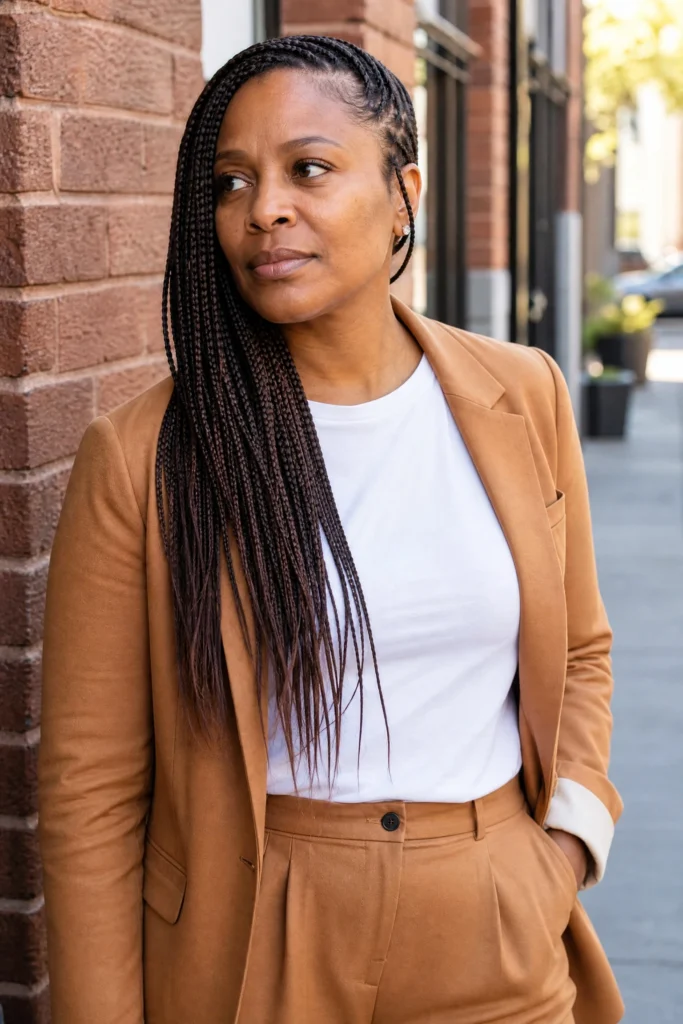
14. Micro Braids in Two-Toned Color
Instead of a gradual fade, this style alternates two distinct colors throughout the installation: dark brown and blonde, black and auburn, deep plum and natural black. The color is distributed through the sections during braiding so that both shades show throughout the length of every braid, not just at the ends. When the braids move, the colors mix and catch light differently. It’s bolder than an ombre and more consistent than random highlights.
Best for: People who want a statement color moment without going too dramatic. Works especially well on longer micro braids where there’s more length for the color contrast to develop.
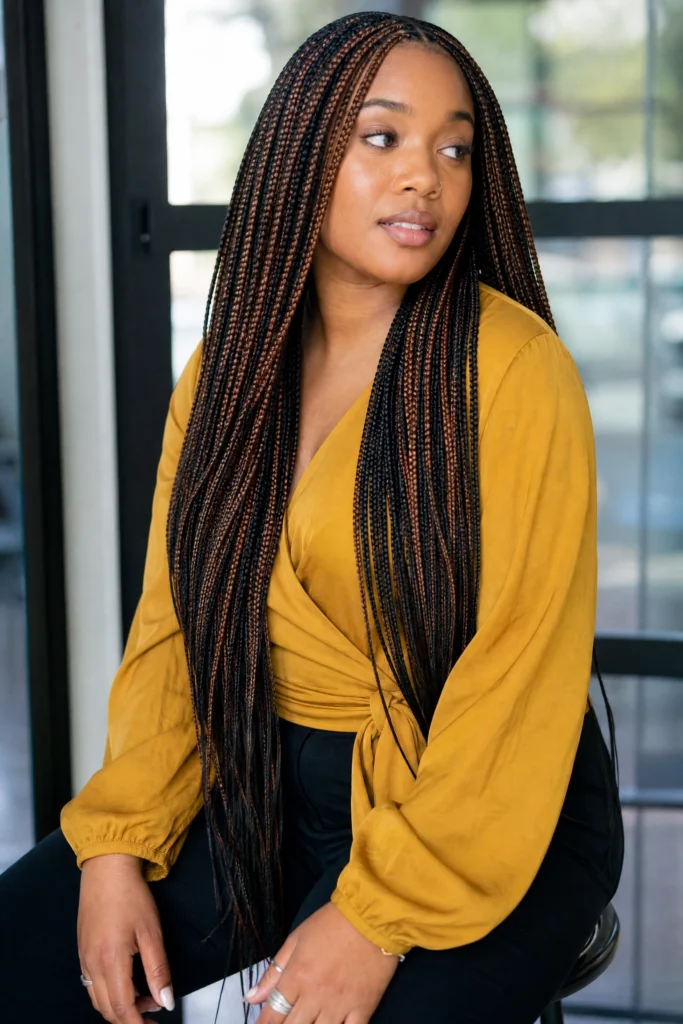
15. Micro Braids Side Ponytail
Gather everything to one side and secure low, letting the braids fall over one shoulder. A side ponytail sounds like it belongs in 2008, but with micro braids, it actually works: the braids have enough weight and fluidity that a side pony looks sleek and intentional rather than casual. Secure it with a simple band or wrap a thin braid around the base. Worn with a simple turtleneck or collared shirt, it looks like you put real thought into your outfit.
Best for: Shoulder length and longer. Especially good when you’re bored of the standard center-part-braids-down configuration but don’t want to spend real time restyling.
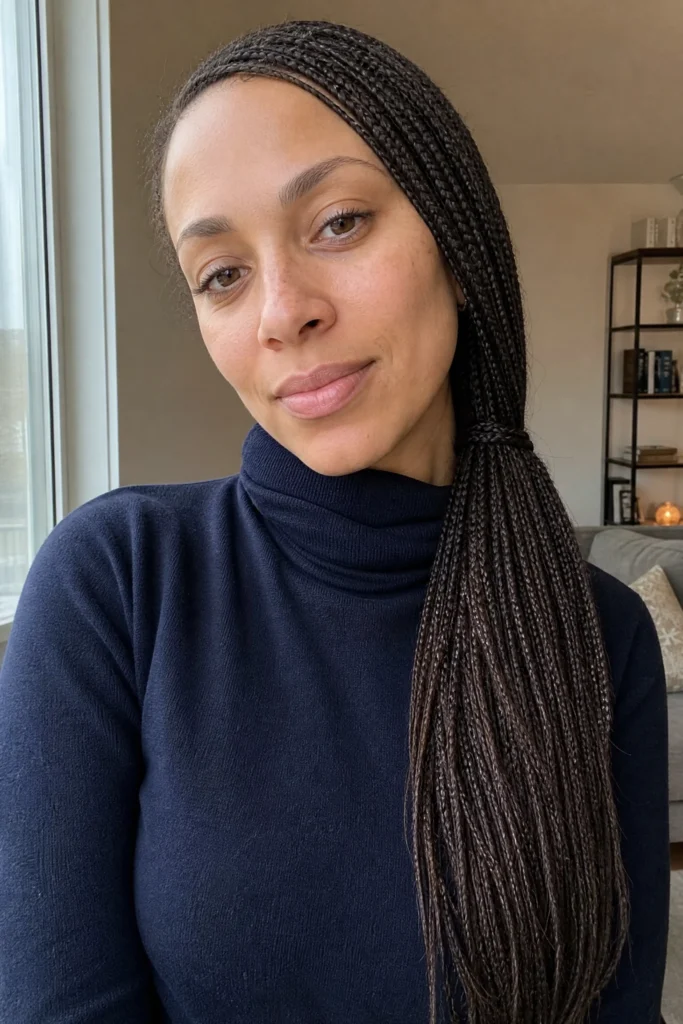
16. Micro Braids with Geometric Parts
The part lines you create during installation don’t have to be straight. Diagonal parts, triangular sections, honeycomb patterns, or a combination of zigzag parts at the crown with straight parts at the nape. All of these make the style look more intentional when your hair is down and the parts are visible. It’s a detail that most people won’t notice until they’re standing close enough to see your scalp, but when they do, it reads as serious craft.
Best for: Anyone working with a skilled braider who has experience with precision parts. This isn’t the style to request from someone who hasn’t done it before.
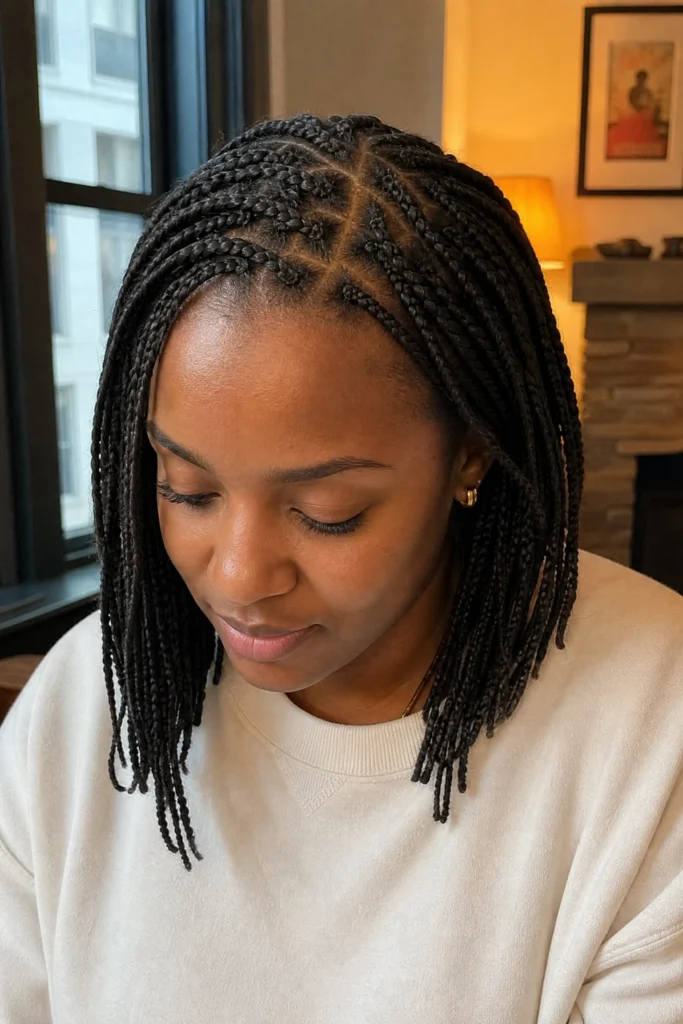
17. Micro Braids with Gold Thread Woven In
Gold or silver thread or metallic string woven alongside the extension hair as each braid is installed adds glint without the weight or commitment of accessories. The thread catches light when the braids move. It’s subtle enough that you don’t look like you’re wearing a costume, but noticeable enough that people ask what’s different about your hair. This works best concentrated at the front sections and hairline, where the light catches it the most.
Best for: Longer micro braids. Great option for anyone who wants something that reads differently at an event without having to add accessories that might slide or fall out.
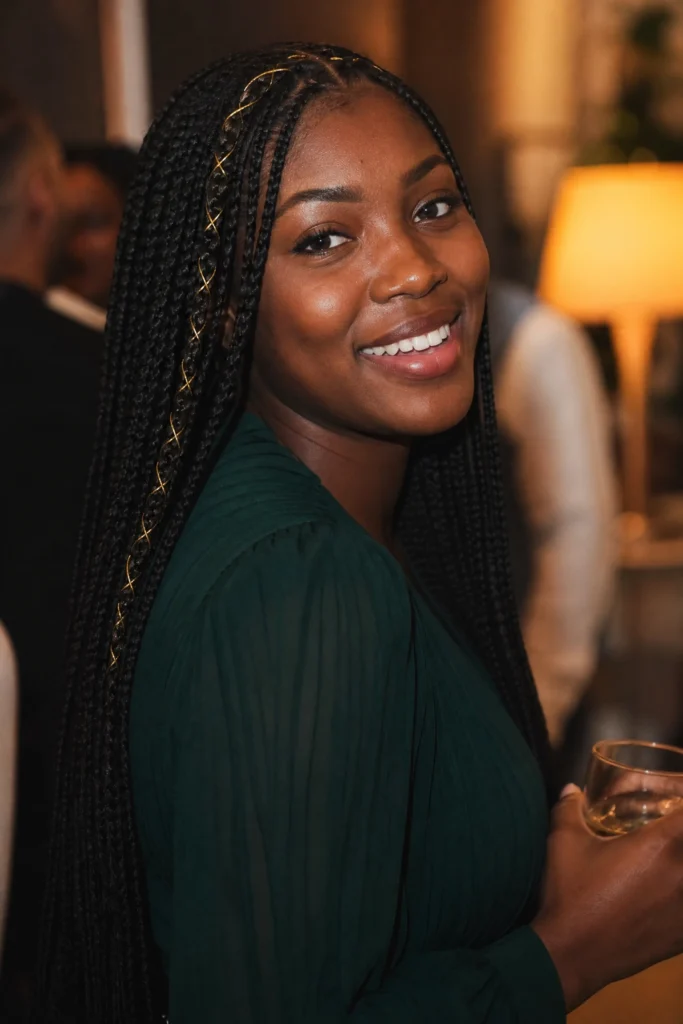
18. Micro Braids Low Bun
Where the high bun lifts and structures, the low bun is soft and romantic. Gather all the braids at the nape of your neck, twist loosely, and pin. Pull a few thin braids free from the front to frame the face. Don’t try to make it too neat. A slightly undone low bun with micro braids is the goal. Celebrity hairstylists have repeatedly cited Zoe Kravitz’s low micro braid bun as a reference image for this exact reason: it looks easy, not effortful.
Best for: Longer braids, at least collarbone length. One of the most wearable formal styles you can do with micro braids because it works with literally any outfit.
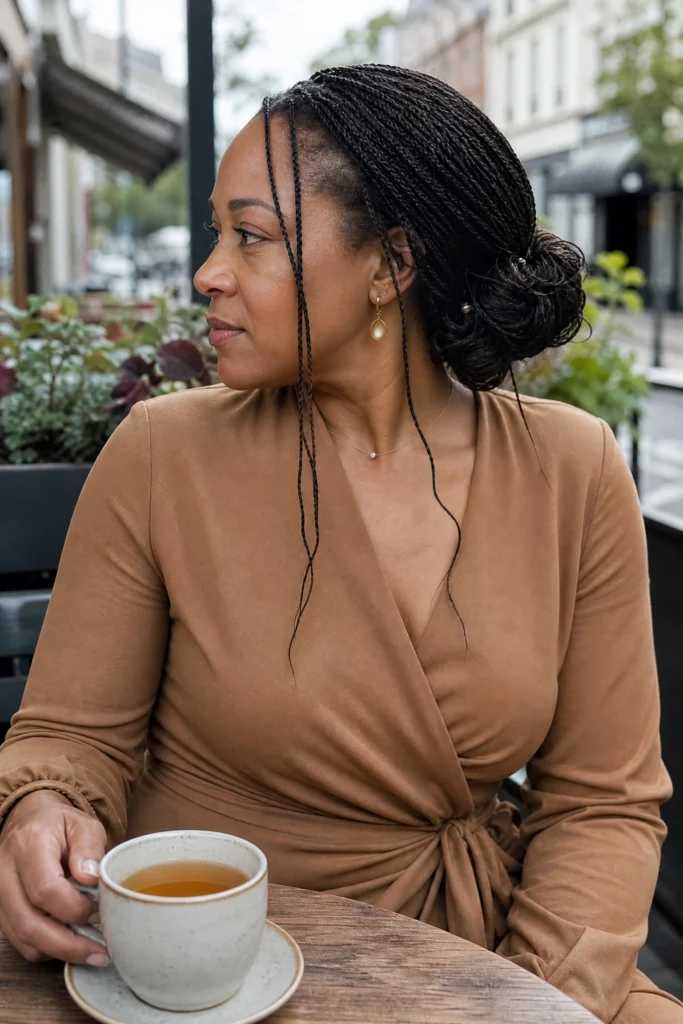
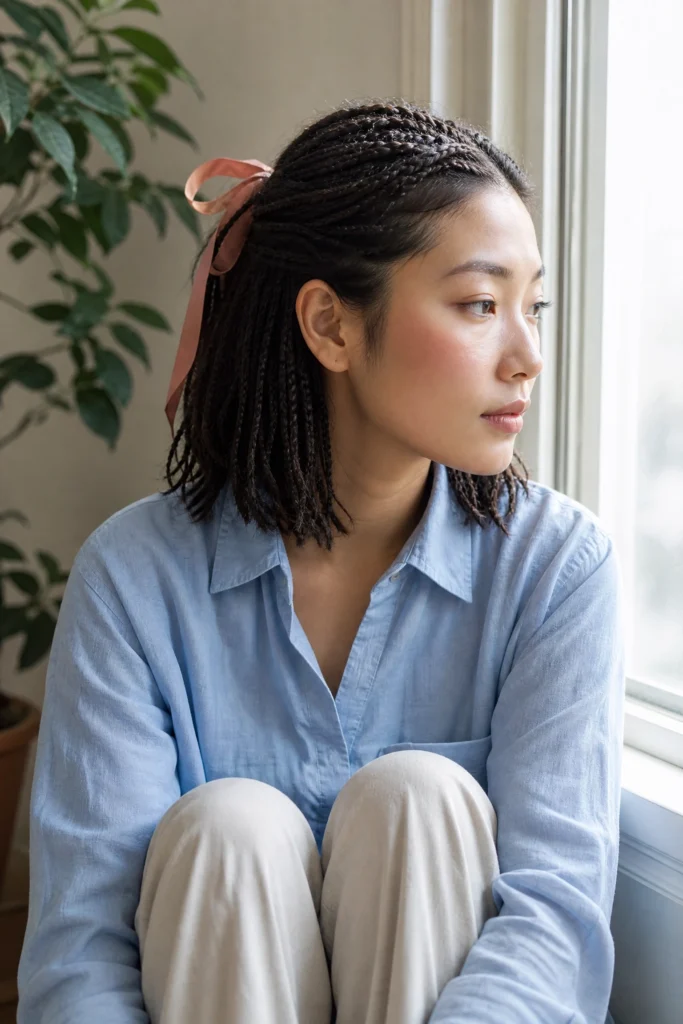
19. Micro Braid Half-Up with Ribbon or Scarf Tied In
Take the top half of your braids back and, instead of just tying them, wrap a silk or satin ribbon or a thin scarf around the base of the half-up before securing. Let the ribbon ends fall loose or tie them into a bow at the back. The ribbon adds color and softness to what would otherwise be a fairly simple style, and it protects the braids at the base (which is where friction and breakage tend to start).
Best for: All lengths, though it works especially well on braids that fall somewhere around collarbone to chest length. Great summer style.
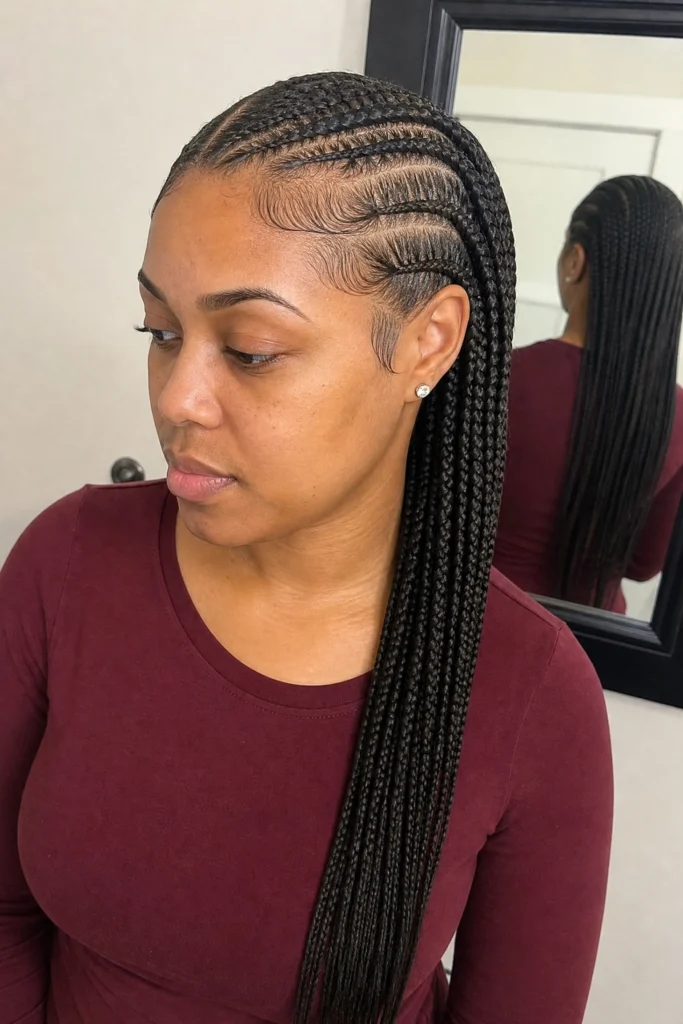
20. Micro Braids with Cornrow Accents at the Front
Instead of having the entire head micro braided, ask your stylist to lay two or three thin cornrows back along each side of your part at the front, then transition into individual micro braids from behind the crown. The cornrows frame the face and add structure to the hairline, while the micro braids give you the movement and styling freedom for the rest. It’s a technique detail that takes skilled execution but results in something that looks very intentional and current.
Best for: People who want the micro braid look with a little more polish at the hairline, or who tend to lose edges quickly with full individual braid installations.
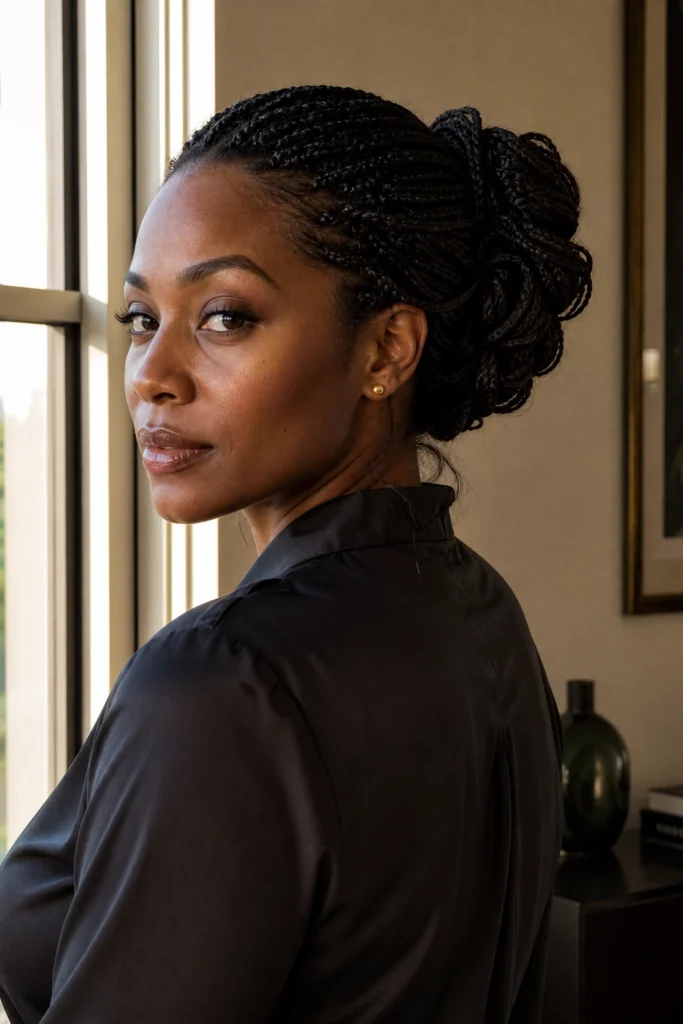
21. Micro Braids in a Twisted Updo
Take sections of your micro braids, twist them together in groups of two or three, then coil them into a low or mid updo, pinning as you go. This is a different look from a bun. The twisted sections create visible texture and dimension at the back rather than a smooth, uniform bun surface. It works well for events because it stays in place without much product and looks like a style that took real effort even if it took about 20 minutes.
Best for: Long micro braids. Good for anyone who wants an updo option beyond the standard bun or ponytail.
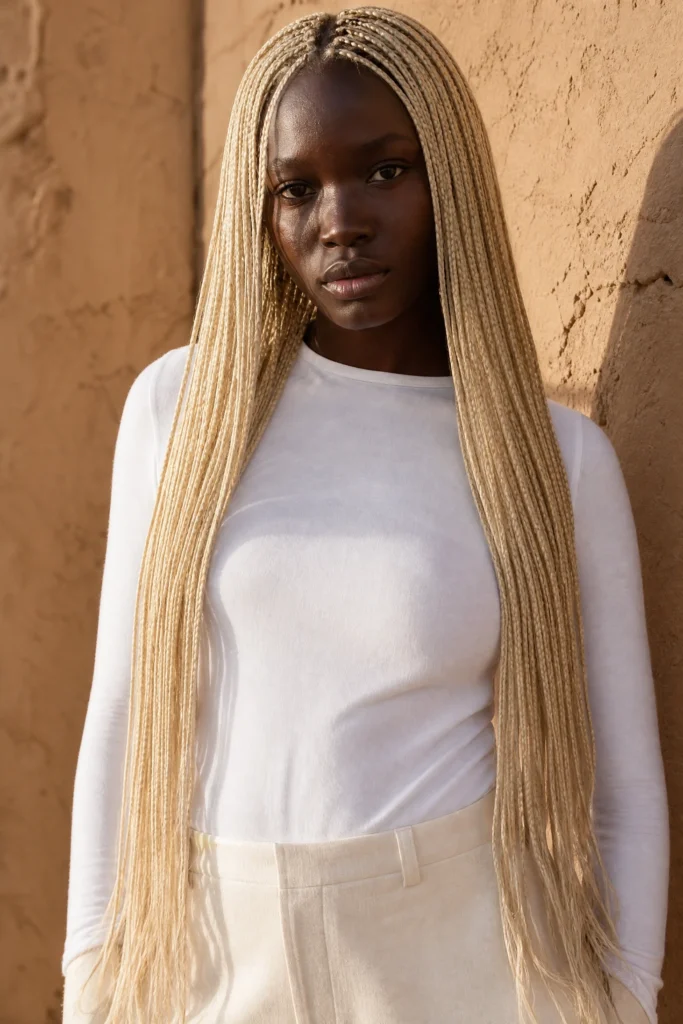
22. Blonde or Platinum Micro Braids on Dark Skin
This isn’t a style variation exactly. It’s a color choice worth calling out on its own because it’s one of the most striking combinations in micro braids. Full platinum or ash blonde micro braids against deep brown or dark skin create a high-contrast look that is genuinely stunning. The color makes the movement and fineness of the braids more visible. It’s a bold choice, and it absolutely delivers.
Best for: People with medium to deep complexions who want their hair to be the statement piece. Works at any length, though waist-length tends to make the most visual impact.
23. Micro Braids with Spring Twist Ends
Instead of leaving ends straight or curled, this style finishes each braid with a short spring twist, the kind of coiled, springy extension texture that bounces when you move. The transition from the flat micro braid to the springy coiled end creates a volume effect at the bottom that gives the whole style more presence and energy than straight ends alone. It’s a popular natural hair option because the spring twist ends mimic the coiled texture of 3c and 4-type hair.
Best for: People with naturally curly or coily hair who want their extensions to blend more seamlessly into their own texture. Works on most lengths.
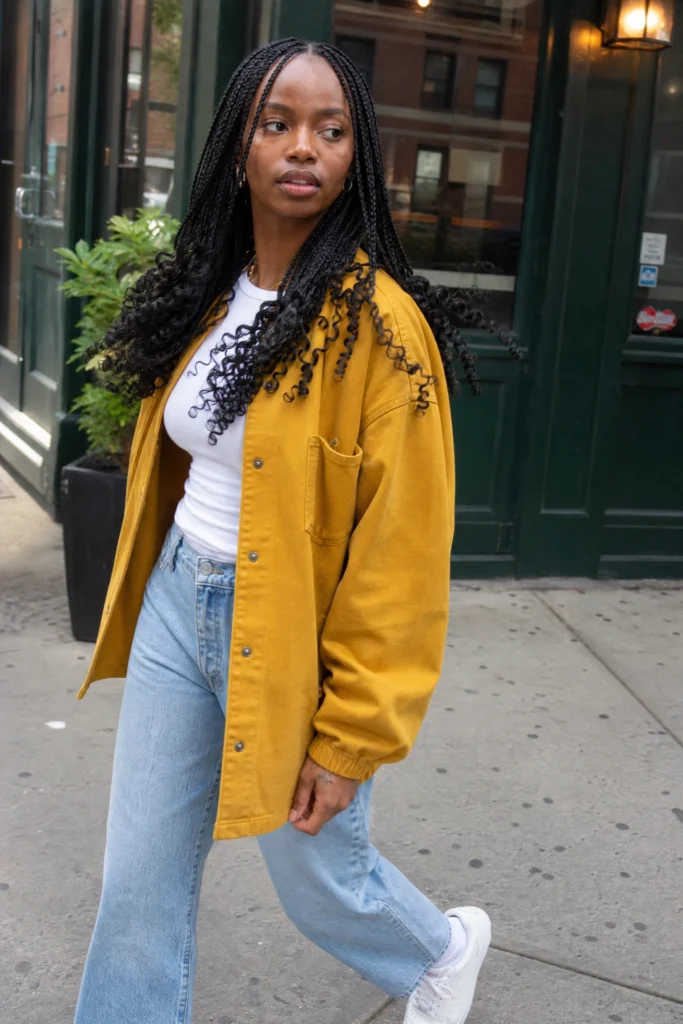
24. Micro Braids Pulled Back with Statement Earrings
Not a technique, but a styling note worth including: micro braids pulled fully off the face (whether into a ponytail, bun, or pinned back) are the ideal backdrop for statement earrings. Because the braids are so fine, they don’t compete with large hoops, sculptural drops, or oversized studs the way chunkier box braids can. A simple bun with chunky gold earrings is one of the strongest quick-styling combinations you can do with this style. The braids stay structural and neutral; the earrings do the work.
Best for: Anyone who has been keeping their micro braids down and is looking for a way to feel like they have a new style without reinstalling anything.
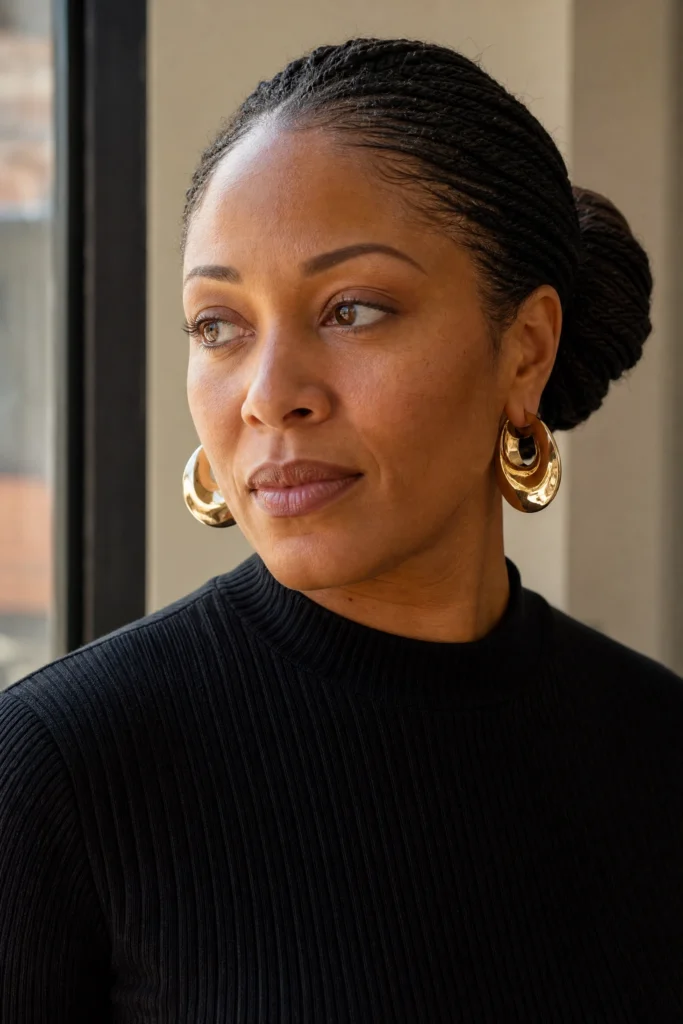
25. Micro Braids That Blend Natural Hair Length
If your natural hair is longer or you’re getting micro braids without extensions, there’s a version of this style where the braids graduate in length, shorter in some sections and longer in others, creating a layered effect when worn down. This is a much harder technique that requires a braider who has done it before, but the result looks like naturally layered hair. The braids move differently at different lengths and create depth and dimension rather than the flat, all-one-length look of most extension styles.
Best for: People with already-long natural hair who want micro braids without a lot of added extension length. Requires a skilled and experienced braider who has done graduated micro braids specifically.
People Also Ask About Micro Braids
Do micro braids damage hair?
They can, if installed too tightly or kept in too long. Tight tension on fine braid sections is where the damage happens: it places stress on individual hair follicles with less of an anchor than larger braids provide. Traction alopecia is a real risk with repeated tight braiding. When installed with appropriate tension, kept in for 6 to 8 weeks, and followed by a proper rest period before reinstallation, micro braids are a genuinely protective style for most people.
Can micro braids be done on short hair?
Yes, though there are limits. Your hair needs to be at least 3 to 4 inches long for most braiders to work with. Very short hair can sometimes be braided in combination with extensions at the root, but this is a more advanced technique and requires a stylist experienced with shorter starting lengths. If you’re at a TWA (teeny weeny afro) stage, most braiders will suggest waiting until you have a little more length to work with.
How long does it take to get micro braids?
Expect a full day, minimum. Installation time ranges from about 4 hours for shorter styles on experienced braiders to 12 or more hours for waist-length micros. Many braiders split the process over two days to avoid client discomfort. This isn’t a cut-corners situation. The time is the cost of the size.
How do you maintain micro braids?
Wash gently once a week or less with a diluted or sulfate-free shampoo, focusing on the scalp with an applicator bottle. Moisturize your scalp every few days with a lightweight oil. Sleep with a satin or silk bonnet or on a satin pillowcase to prevent frizz and friction. Avoid heavy creams or butters directly on the scalp. They build up fast and are hard to rinse out without disturbing the braids.
How long do micro braids last?
With consistent maintenance, 6 to 8 weeks is the standard range. Some people take them to 10 or 12 weeks, and specialist braiders sometimes work with clients who keep them in for 3 to 4 months. Most trichologists recommend 6 to 8 weeks as the point where scalp health and style quality still align well. Past that, shedded hair starts accumulating inside the braids, the roots begin to mat, and takedown becomes significantly harder.
Before You Book: The Things Most Posts Don’t Tell You
Finding a micro braider specifically, not just someone who does braids, genuinely matters. Micro braids are a specialized skill, and not every braider who does excellent box braids or cornrows will produce the same quality with micros. The size requires a different level of consistency and hand control. Look at recent work, specifically at close-up photos of the root area and of the braids mid-length, before you sit down.
Ask about the extension hair they use. For micro braids in particular, human hair is often recommended over synthetic because it tangles less with your natural hair during installation and is less likely to mat at the root over time. It costs more, but the tradeoff is usually a longer-wearing style with less damage on takedown.
And on takedown: take your time. The braids have been in for weeks. Any shed hair that couldn’t fall naturally is sitting inside those braids, and rushing the removal is where breakage actually happens. Use a detangling conditioner, work in small sections, and don’t pull.
A few weeks of good growth and a rest period later, you’ll be back scrolling this list picking your next style anyway.
The author has spent years navigating protective styles for natural and color-treated hair, through the growing-out phases, the bad takedowns, and the ones that genuinely turned out exactly as planned. All style advice here reflects current expert guidance and real-world experience with what actually works.